
- February 19, 2025
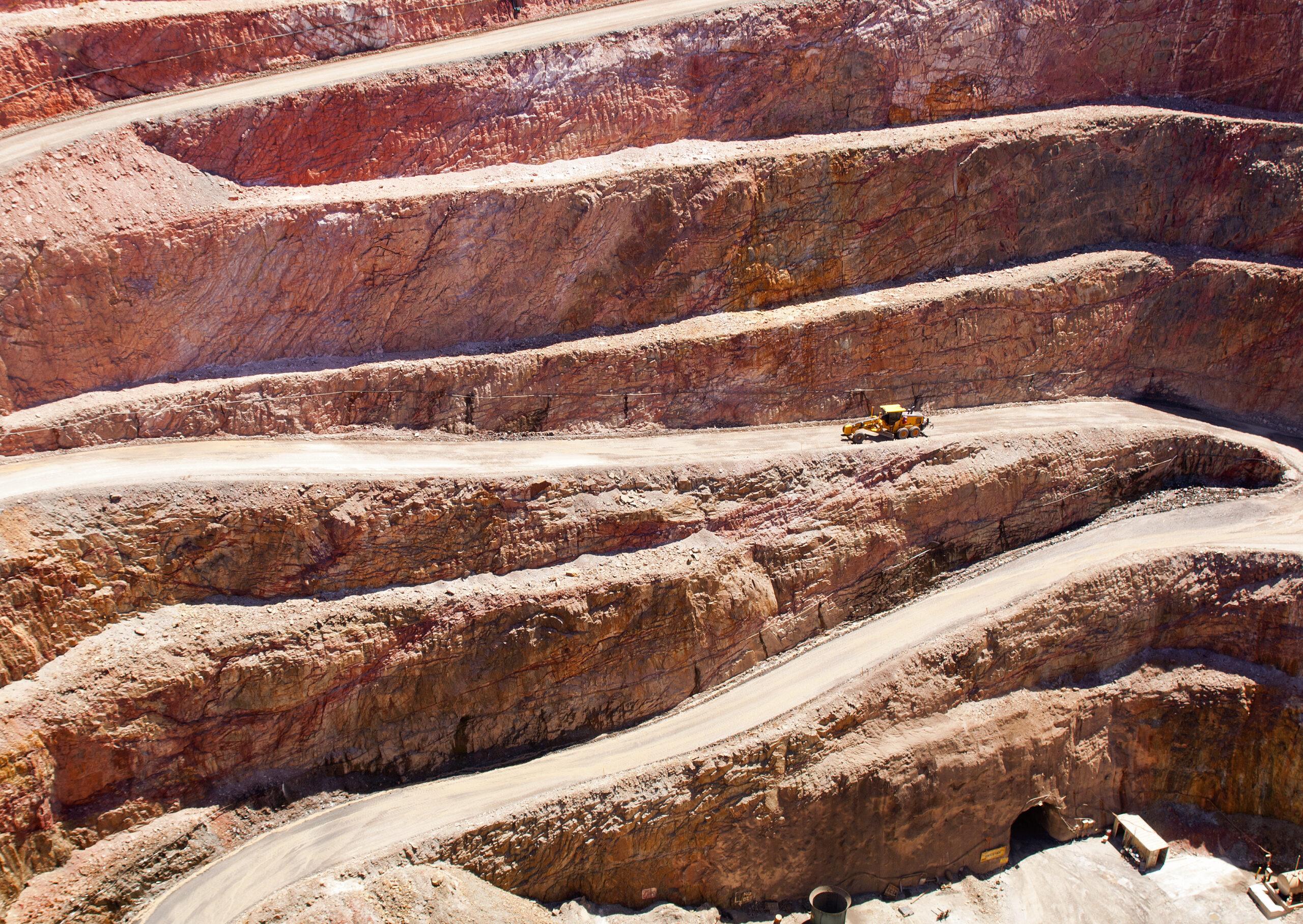
Consideration of Execution Strategies and Constructability in Mine Planning and Closure Designs
Constructability involves integrating operational knowledge and experience to enhance project performance across all phases of a project, including planning, design, construction, operation, maintenance, and decommissioning (Guo & Zhang, 2022).
A common challenge within the mining industry is the tendency to focus primarily on the final design of mine projects and closure designs, neglecting to consider the execution strategy and constructability of the design. This oversight can lead to adverse consequences, including impractical or unsafe construction methods, failure to meet design objectives and criteria, cost overruns due to field-based revisions of the final design, and issues arising from non-compliance with specific regulations, permit conditions, or commitments. Some specific examples of construction impacts when constructability is not considered in design include inadequate consideration for minimum equipment operating parameters such as road widths, grades, or berms, the requirements for vehicle runaway protection, and minimum slope stability requirements. Construction may require additional lease boundaries or water collection and management facilities not otherwise required for the final operating or closure landform design.
By integrating execution and constructability considerations for interim stages into the final design process, companies can mitigate these risks and adopt landform designs that are practically feasible. This proactive approach can lead to safer, more cost-effective, and environmentally responsible mining operations.
In this month’s Conversation on Closure, we look at two case studies, presenting the challenges we found on-site with respect to constructability, and our approach to managing and mitigating execution and construction risk.
Geotechnical Stability
Mine Site A has a subarctic climate with cool summers (Köppen Climate Classification). Okane reviewed the final landform design for one of the mine rock stockpiles (MRSs) as part of the site’s reclamation plan. The objective of the landform construction was to enhance the visual quality of the MRS, improve the geotechnical stability, and prepare a surface for vegetation while allowing for operational flexibility. The final landform was to be constructed by re-sloping the 300-meter-high MRS, currently at an angle of repose, to an average angle of 26 degrees using a horizontal cut method with a dozer fleet. The final landform achieved an acceptable Factor of Safety (FoS) and was approved for construction.
To support execution, Okane explored interim design stages to demonstrate the progression of the landform construction as the angle of the repose slope was pushed down toward the valley bottom. Our geotechnical assessment revealed that the interim designs required to achieve the proposed final landform did not meet the stability requirements. Weak foundation soils and oversteepening of the slope as new rehandle material was planned to be pushed along the dormant stockpile face were considered a risk that could lead to potential safety concerns. More critically, failure to achieve the required FoS during the interim construction stages could pose a risk to nearby infrastructure, including rail lines and site access roads.
The project needed to be paused to reassess geotechnical stability and implement necessary mitigations before proceeding with further re-sloping or reclamation activities. In this case, both the current and final landform conditions met an acceptable global stability FoS. The highest risk of geotechnical instability existed during the interim construction phases. This case study demonstrates the critical nature of understanding the interim construction phases of a project when evaluating and managing operational risks.
Constructible Interim Design
Mine Site B, also classified under the Köppen Climate Classification as having a subarctic climate with cool summers, presented unique constructability challenges. The detailed landform designs and Issued for Construction (IFC) drawings were developed by another consultant. Our team was engaged to review the design and provide construction support, including the development of a construction strategy and execution plan. Upon evaluation, it was identified that the proposed final design was not practical to construct.
One of the key issues was a slope that required a substantial cut volume to be excavated and hauled up to the plateau above. While this approach aimed to minimize additional toe disturbance and environmental impact, it resulted in a significant increase in material movement via truck-and-shovel operations, ultimately inflating project costs.
Additionally, the final landform design did not incorporate an interim construction access road required to facilitate the truck-and-shovel operations. To achieve the final landform, the plan required extensive cuts beyond the designated landform boundaries, the placement of additional fill at the toe to construct the lower sections of the access road, and the construction of large runaway lanes extending beyond the project disturbance boundaries. All these factors introduced significant logistical and cost challenges. Additionally, cut-and-fill slopes to construct the access road would remain at an angle of repose through multiple seasons, resulting in a high potential for slope erosion and sedimentation of the downstream environment.
Okane proposed developing the interim construction access road and final landform together to achieve a fully integrated design that optimizes construction volumes, manages operational risk, and improves constructability. This approach reduced the truck-and-shovel component of the project and enabled the use of tracked carriers for the construction of water management infrastructure, thereby simplifying construction, and reducing construction costs.
Okane’s Approach
The interim construction phase often represents the highest risk for geotechnical instability. A well-designed landform is only as effective as its ability to be executed. If a design fails to consider how it will be constructed—such as the placement of haul roads, appropriate gradients, and safe access routes—it risks being impractical or even unfeasible.
Effective mine and closure design requires an integrated approach that considers interim construction phases and execution strategies from the outset to manage potential geotechnical, operational, and financial risks. As mine planners and mine closure experts, Okane has global experience in developing and executing mine, tailings, and closure landform design and construction. We collaborate with mine operators and contractors, incorporating local, site-specific knowledge, local health and safety regulations, and consideration for available equipment into the design process to promote a shared understanding and alignment on the project objectives, design criteria, and execution strategy.
To learn more about how we can help you develop effective, practical, and responsible mine landforms, contact us at info@okaneconsultants.com.
References
Guo, K. & Zhang, L. (2022). Multi-objective optimization for improved project management: Current status and future directions. Automation in Construction, 139. https://doi.org/10.1016/j.autcon.2022.104256