
- April 22, 2025
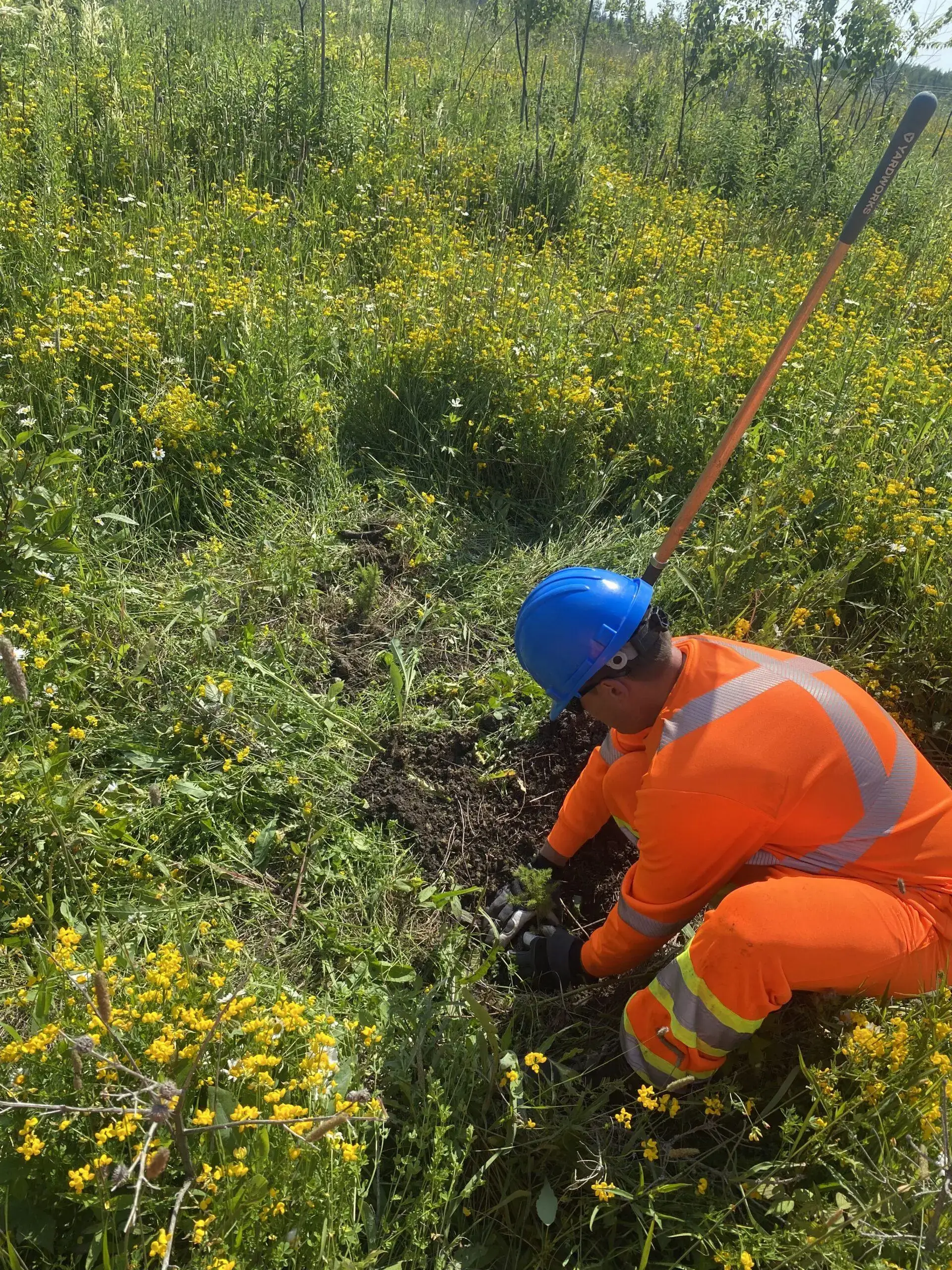
Optimizing Mine Rehabilitation and Reclamation through Revegetation Trials
A current challenge in implementing revegetation plans for mine-affected landscapes is that each mine site has unique environmental conditions, including soil type, climate, topography, and hydrology. Revegetation trials can facilitate mine rehabilitation and reclamation by providing site-specific information to fill knowledge gaps related to revegetating mine-affected lands.
A recent report from the Land Degradation and Development Journal highlights the value of these trials by examining how mixed native and non-native vegetation species perform in various substrates from mine rock stockpiles. Its goal is to identify plant species, including non-native, that can be incorporated at the early stages of revegetation to promote quick biomass establishment, followed by enrichment or replacement by native species (Ribeiro et al., 2025). This approach aims to balance quick soil coverage while meeting jurisdictional requirements and reclamation objectives, and promoting functional ecosystem succession.
Findings from this report, along with published guidance from various jurisdictional regulatory bodies, highlight the importance and effectiveness of revegetation trials in developing site-specific rehabilitation and reclamation strategies that meet closure objectives. As scientists, we recognize that rehabilitation strategies that work in one location may not be effective in another. Revegetation trials allow for the testing and optimization of methods tailored to the specific characteristics of each site.
In recognition of Earth Day this month, this Conversation on Closure article explores a conceptual model for planning and implementing revegetation trials, highlighting opportunities to optimize mine rehabilitation and reclamation plans while facilitating positive environmental and closure outcomes.
The Importance of Revegetation Trials
Revegetation trials play a critical role in facilitating ecological balance post-closure by assessing the effectiveness of various growth media, revegetation methods (e.g., appropriate plant species, planting methods, etc.), water management, and invasive plant control. The key to effective revegetation trials is to understand the uncertainties and primary risks onsite, and assess which revegetation methods can cost-effectively address these risks.
Incorporating revegetation trials early in closure planning provides mining operations with valuable insights into how different available material resources onsite (e.g., potential growth media), soil amendments, revegetation methods, and seed mixes interact with local climatic and hydrological conditions simulated for the expected closure conditions after mining operations.
Trials enable long-term monitoring of vegetation establishment, biodiversity return, and the overall development of a self-sustaining ecosystem, refining rehabilitation and reclamation plans, such as enhancing cover system designs to minimize erosion and net percolation and fostering a stable and functional post-mining landscape.
Data from revegetation trials inform mine rehabilitation and closure strategies, and contribute to the development of post-mining landforms that meet closure objectives. Revegetation trials also reduce potential risks of not meeting the closure objectives through researching reclamation strategies and evaluating knowledge gaps.
Furthermore, revegetation trials help support regulatory and stakeholder engagement by demonstrating a tangible commitment to responsible mine closure, biodiversity enhancement, and effective land rehabilitation, thus facilitating collaborative decision-making and building confidence in sustainable closure strategies.
Conceptual Model for Revegetation Trials
When planning for mine rehabilitation and reclamation, Okane uses a conceptual model that serves as a guiding framework for designing revegetation trials. This model integrates ecological principles with mine planning and closure planning to support revegetation efforts that are both scientifically proven and practically viable.
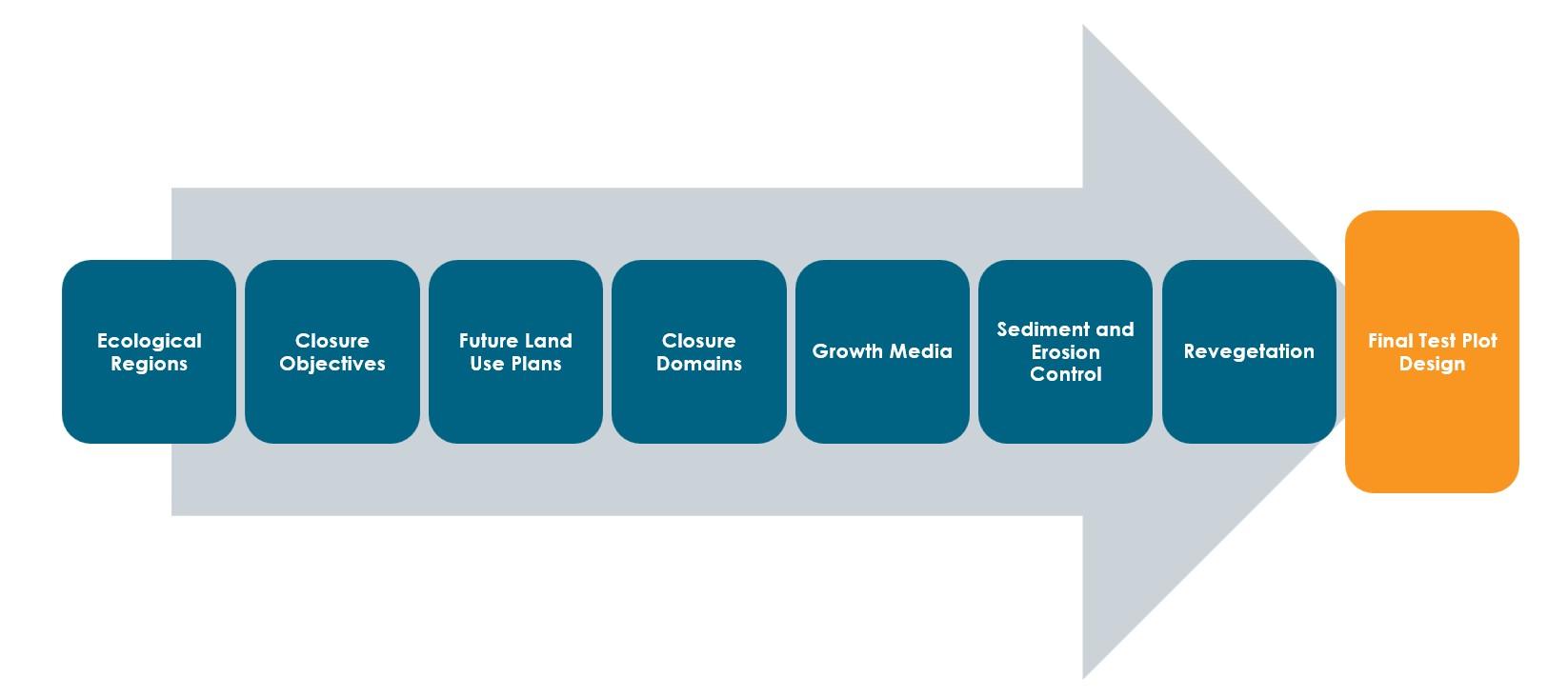
The process begins with an assessment of the ecological region, examining the conditions of undisturbed areas, climate, precipitation patterns, and the types of plant communities adapted to the area. These environmental characteristics are built into the trial design.
Closure objectives are subsequently defined in alignment with the intended post-closure land use. For example, if the designated end land use is agricultural, revegetation trials involving tree species may be inappropriate or ineffective. Alternatively, trial species selection should reflect the functional and ecological requirements of the target land use.
Closure domain is another important factor. Are we reclaiming a tailings storage facility, a mine rock stockpile, or a haulage road? This step involves collaboration with the mine planning team, who identify disturbed areas and their characteristics. The rehabilitation team then incorporates these conditions into the trial. For example, a revegetation trial might be conducted on a sample plot of mine rock to evaluate effective reclamation strategies for the site’s mine rock stockpiles.
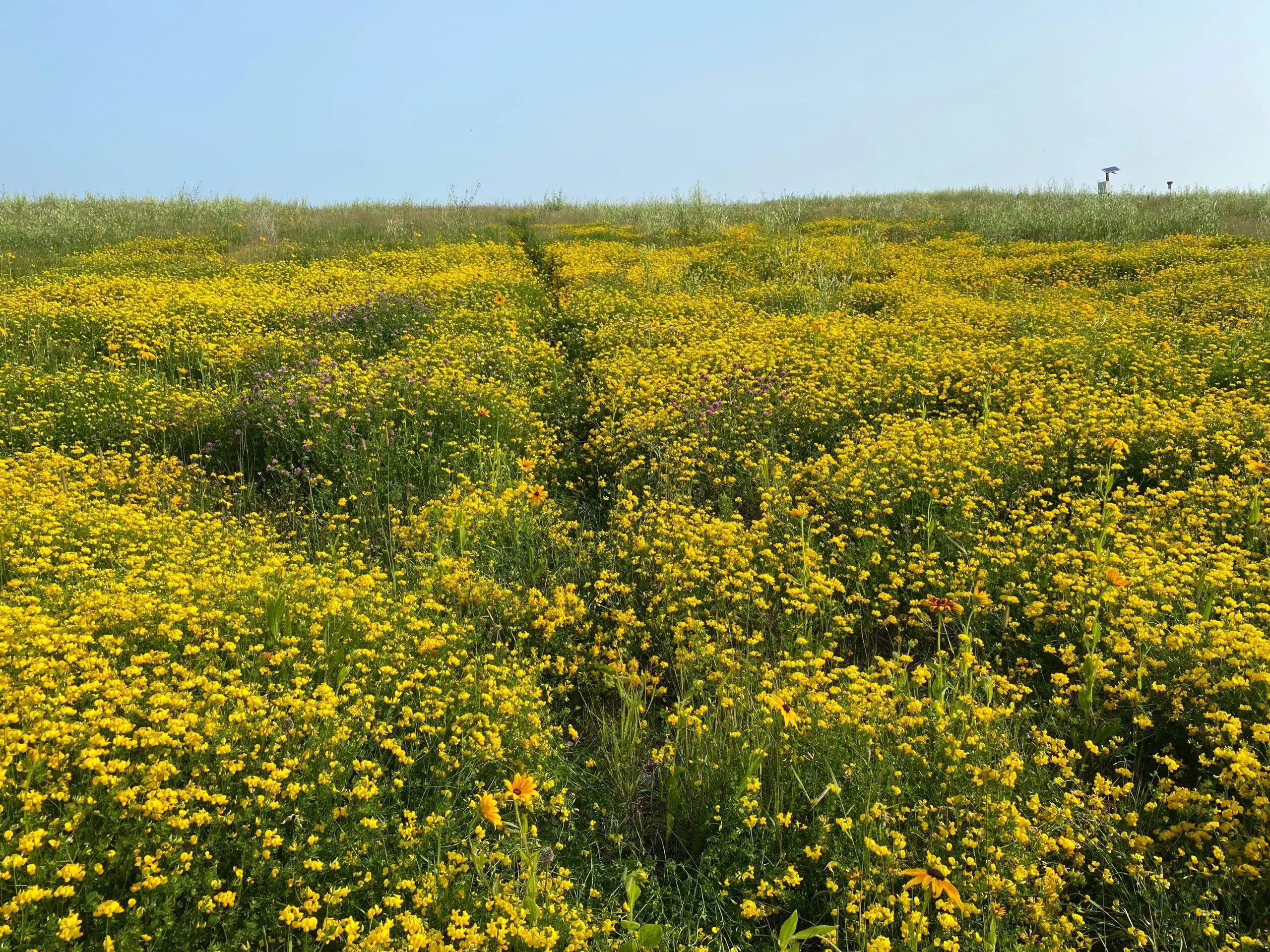 Note: Revegetation cover trial on mine rock stockpile [Digital Image]. Okane Archives.
From a soil perspective, revegetation trials should closely replicate the growth media expected to be available at closure, which often consists of a mix of degraded soils and non-soil substrates. For instance, conducting revegetation trials on 30 cm of topsoil would not be representative if the mine closure plan only anticipates 10 cm of available topsoil. Aligning trial conditions with forecasted closure materials helps produce results that are relevant and applicable to final reclamation strategies.
Consequently, sediment and erosion control must be carefully considered when designing revegetation trials. If the target closure domain is a steeply sloped mine rock stockpile but the trial is conducted on flat terrain, the results will lack relevance to actual conditions. In such cases, runoff may lead to significant soil loss during implementation. To improve the applicability of trial outcomes, revegetation trials should be established on slopes that mirror the final landform design—for example, conducting revegetation trials on a 20-degree slope if that is projected in the mine closure plan. This approach enhances the reliability of trial results under anticipated site conditions.
Lastly, the appropriate vegetation prescription, whether culturally specific, locally native, or non-native, must be determined to address site-specific risks. Careful consideration is needed to avoid introducing invasive species that could significantly disrupt the natural successional ecosystem trajectory. Additionally, whichever planting method is chosen during the large-scale implementation, the revegetation trial will test or replicate these planting variables.
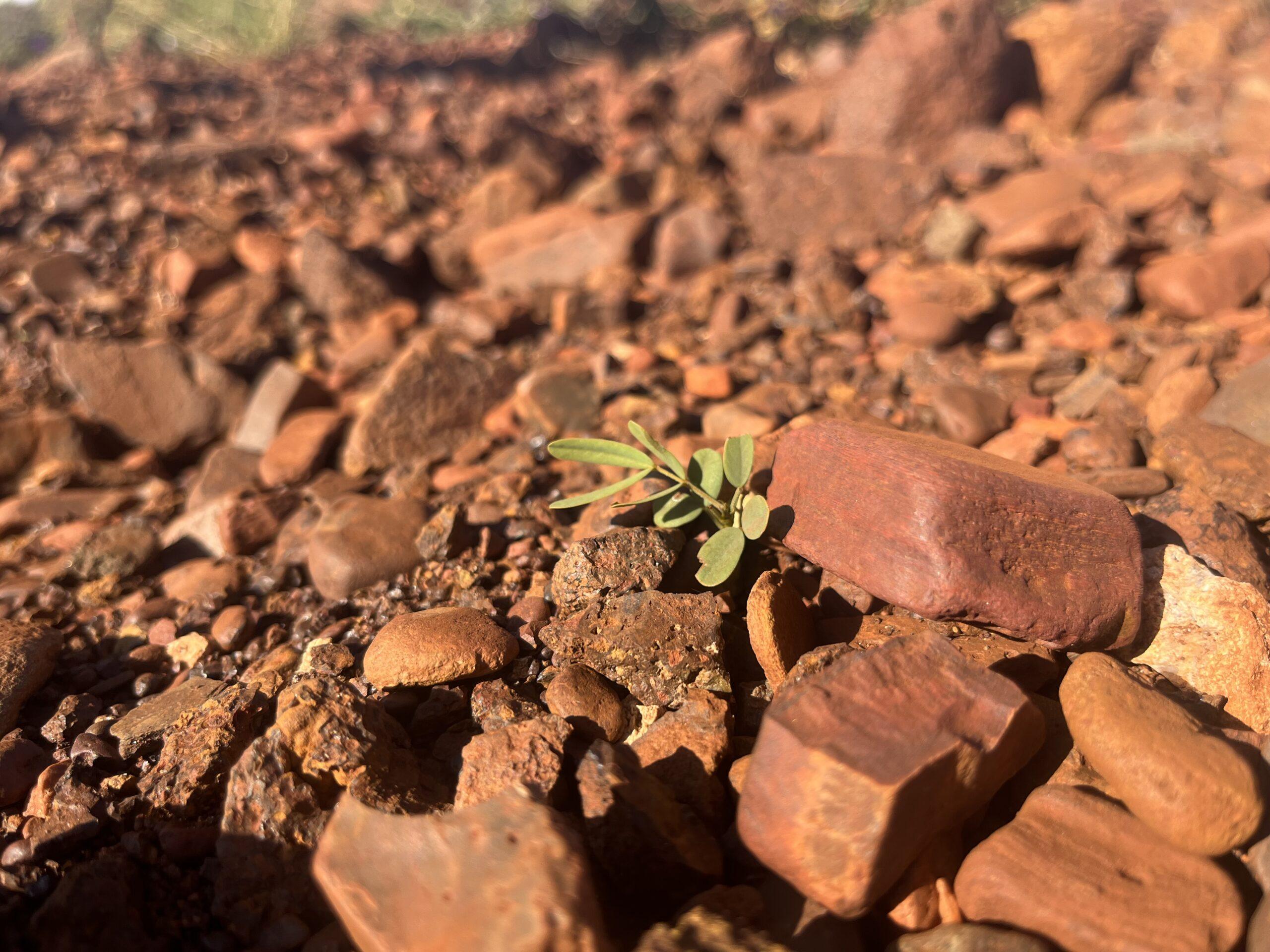
Note: Seedling of native plant growing during a revegetation trial [Digital Image]. Okane Archives.
Applying the Revegetation Conceptual Model – An Australian Case Study
Several tailings storage facilities (TSFs) at a client’s mine site in Australia have been decommissioned and are approaching closure. At closure, these TSFs will be prescribed with a cover system designed to minimize the need for ongoing monitoring, care, and maintenance while reducing long-term risks. The closure objective is to return the above-ground TSFs to vacant Crown land, with restricted access for the public and fauna. Okane was engaged to support the closure trials of these TSFs, aiming to stabilize disturbed areas to prevent further impact and to minimize dust generation.
The closure trials include a primary trial consisting of three equally sized areas with varying cover system thicknesses, featuring soil sensors, a climate station, a rainfall tipping bucket, and a runoff station. Seven satellite trials will be installed, each equipped with soil sensors. The cover system materials used for both primary and satellite trials will consist of quarry overburden and borrow pit material. Along with testing cover material and thickness, the trials also evaluate seed mix variables, seeding methods, and fertilizers to inform and support closure objectives.
To inform the closure trials, trade-off studies were conducted and identified that active vegetation establishment during trial construction would yield valuable ecological and environmental data. This data will inform numerical modelling, desktop studies, and landform design processes—ultimately supporting the development of closure objectives and regulatory approvals.
Applying the Revegetation Conceptual Model – A Canadian Case Study
A client’s site in Canada is preparing for progressive reclamation with the objective of restoring the land in alignment with the expectations of Indigenous rightsholders. One of the most significant challenges in achieving successful closure is managing sediment and erosion risks, particularly during the early stages of revegetation when soils are most unstable. Erosion can compromise soil stability, displace seed and mulch, and delay vegetation establishment—making erosion control the site’s primary focus of reclamation planning.
To support sediment control and improve surface stability, trial plots will be established using a blended growth media composed of coarse woody debris and clean wood. These materials are expected to enhance soil structure, reduce surface runoff, and increase water retention. The goal is to evaluate how this media performs under field conditions and whether it offers a practical solution for minimizing erosion in areas with limited topsoil availability.
Our reclamation approach incorporates erosion modelling and landform design to proactively manage runoff and surface stability. Slope gradients, drainage patterns, and soil characteristics are analyzed using predictive models and data from cover system performance monitoring. This approach enables final landform designs that can reduce overland flow velocities, promote infiltration, and support vegetation cover capable of withstanding erosive forces.
In addition, a localized seed collection program may be implemented to further support erosion control. By collecting seeds from native species in nearby areas, the selected vegetation is more likely to establish rapidly and form dense root systems that anchor soil and reduce sediment loss. This approach enhances the effectiveness of early-stage erosion control and supports long-term site stability.
Okane’s Approach
At Okane, our Rehabilitation and Reclamation solution adopts a site-specific approach that balances science with site-specific operational feasibility. Every project presents unique environmental conditions, regulatory frameworks, and operational constraints.
Our team supports clients in planning effective revegetation trials tailored to a variety of climates—from the Australian outback to continental regions in Canada. We work closely with Indigenous rightsholders, mine engineers, and other subject matter experts to navigate these constraints and develop revegetation plans that align with ongoing or post-mining activities —optimizing mine plans and ecological success.
Our solution helps facilitate resilient landscapes that support biodiversity and ecological functions. Conducting revegetation trials also helps minimize the risks of rehabilitation and reclamation failures on a large scale, creating long-term value for both industry and community members. We prioritize the substrates, growth media, and plant species that will be available to us at closure and are feasible for implementation. Every aspect of the project is considered so that revegetation trials closely reflect the conditions expected at closure.
Our approach lays the foundation for scaling revegetation trials with greater confidence and clarity in understanding risks and allowing for an adaptive approach. Our commitment to an integrated, interdisciplinary approach helps bridge the gap between mining operations and environmental stewardship. To learn how we can support your mine operations with a practical rehabilitation and reclamation plan upon closure, contact us at info@okaneconsultants.com.
References
Ribeiro, P. G., Gastauer, M., Caldeira, C. F., Silva, J. R., & Ramos, S. J. (2025). Optimizing mine land revegetation: Combining native and non-native species for rapid biomass accumulation and soil cover. Land Degradation & Development. https://doi.org/10.1002/ldr.5571