
- July 16, 2025
How Can Reactive Transport Modelling Help Reduce Acid and Metalliferous Drainage Risks?
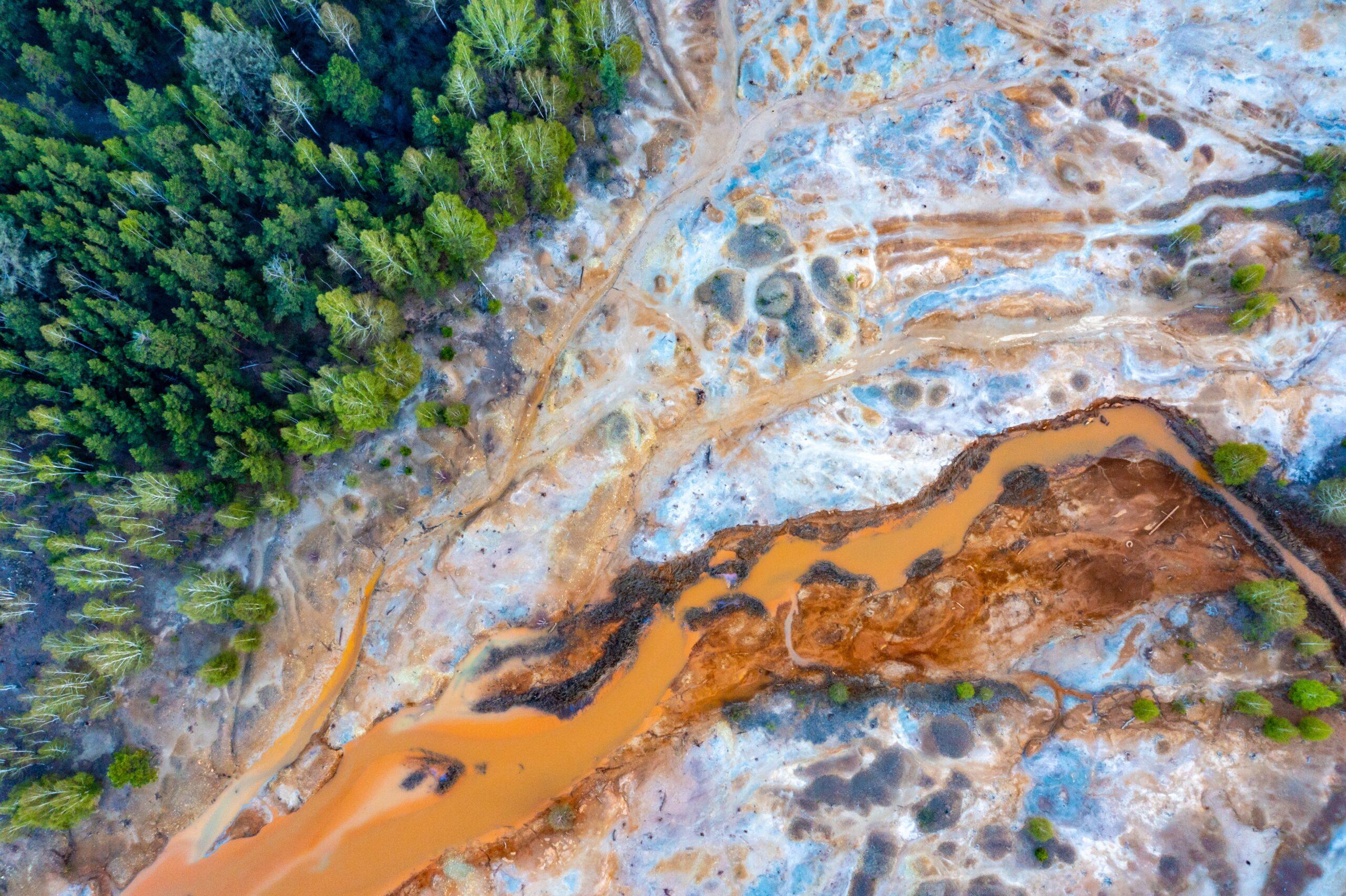
Acid and metalliferous drainage (AMD) is a complex and costly challenge across many mine sites, posing significant operational and water quality risks throughout the life of mine and beyond closure. To address this, the mining industry is increasingly adopting leading practices such as implementing engineered cover systems for long-term AMD management.
Over time, the geochemical environment beneath cover systems evolves due to processes such as sulfide mineral depletion, acid generation, and secondary mineral formation. The Queensland Government’s recently released report on cover system trials recommends modelling as a key tool to evaluate various closure cover scenarios, including different weather conditions, and to identify any sensitivities of the cover system during extreme weather conditions (Nicolson et al., 2025).
Inputs from tools like reactive transport modelling help us understand complex subsurface processes, ultimately supporting better AMD risk management and environmental decision-making. Reactive transport modelling can be used to iteratively develop, test, and validate cover designs. These models allow for assessment of multiple alternative cover scenarios before conducting field trials and implementing the final cover system design.
As integrated mine closure planners, we recognize the critical role of reactive transport modelling results in evaluating and optimizing cover system performance to limit AMD effectively. In this month’s Conversation on Closure, we explore how reactive transport modelling can further inform the cover system design process and guide the necessary adjustments to address AMD risks.
What is Reactive Transport Modelling?
Like all closure plans, reactive transport modelling starts with a well-defined conceptual model of the site. A conceptual model helps identify key inputs, potential reaction processes, and expected outputs, informing the parameters required for accurate simulations.
If the modelling results align with the conceptual model and measured flow rates or concentrations from the real world, it increases confidence in the predictions and helps validate the performance of the proposed cover system design. If the results do not align, it provides an opportunity to reassess assumptions and identify processes or factors that may have been overlooked. A key component of this process is having sufficient data to “calibrate and validate” the model results; the more data available to constrain the model and confirm outputs at different scales, the less uncertainty there will be in the results.
The steps involved in building a reactive transport model can vary, but it is best to start simple. First, define the properties of the material and simulate flow. Then, gradually add geochemical components one at a time, beginning with sulfide materials, followed by buffering minerals, and then secondary minerals.
Depending on the data available, preliminary models can be first calibrated to laboratory-scale or kinetic field bin data before being scaled up to full-scale facilities, following the approach modelled by Wilson et al. (2018). After this, the placement of cover systems can be simulated to forecast release rates and/or compare the effects of different cover system designs on long-term water quality from the TSF or mine rock stockpile.
Benefits of Incorporating Reactive Transport Models
A key application of reactive transport modelling in cover design is to assess how the depth of oxidation progresses before and after cover placement. When sulfide-bearing materials oxidize, they consume oxygen and release metals and acidity.
Reactive transport models incorporate kinetic data, such as oxygen consumption rates from acid-base accounting, Advanced Customizable Leachate Columns (ACLCs) tests, or field-scale measurements to simulate how rapidly oxidation progresses and how effective a cover is in limiting oxygen ingress. Sensitivity analyses can then be performed to evaluate different design scenarios and material configurations.
Typically, a one-dimensional (1D) reactive transport model is used to simulate long-term geochemical changes, and its results are coupled with more complex two-dimensional (2D) numerical models to represent spatial variability and water/oxygen flow.
For example, when Okane was engaged to develop a closure cover system field trial for a TSF at a gold mine in Brazil, we used reactive transport models to evaluate four different cover system scenarios. The models were scaled to the size of the TSF, and results from 1D soil-plant-atmosphere and 2D oxygen modelling were incorporated as inputs to assess differences in cover system performance.
The cover system scenarios featured saprolite layers of varying thicknesses but excluded low-sulfur tailings from the design. A sensitive analysis was then conducted to simulate potential TSF seepage conditions if low-sulfur tailings were unavailable at the end of the mine life. The modelling results showed a decrease in sulfate concentrations and loading rates compared to cover scenarios that included a low-sulfur tailings layer.
Okane’s Approach
While not all sites require reactive transport models for cover system design, they are particularly valuable where site conditions are complex or long-term performance is a key concern. When reactive transport models are applied accurately to the cover design, it helps reduce uncertainty and enhance the reliability of cover system performance, ultimately reducing AMD risks.
Many guidance documents, including one Okane has collaborated on with the International Network for Acid Prevention, Global Cover System Design, help the mining industry develop strategic approaches for designing effective cover systems tailored to varying factor inputs.
Okane’s environmental geochemistry solutions are customized for each project and backed by a comprehensive suite of services, ranging from laboratory testing and field data interpretation to detailed predictive modelling. To see how these services come together in practice, check out our short video illustrating how we help clients design effective solutions for managing AMD in TSFs and mine rock stockpiles.
Our team of environmental geochemists and hydrogeologists leverages powerful modelling platforms such as PHREEQC, MIN3P, and Geochemist’s Workbench (GWB) to simulate complex geochemical interactions in mine material environments. These tools enable us to forecast long-term water quality outcomes under varying conditions, supporting proactive and sustainable mine design strategies.
At the core of our approach to minimizing AMD risks is the integration of geoscience expertise with closure planning and water stewardship. Our work has been featured at leading industry conferences, including the Tailings and Mine Waste 2024 conference and the 2025 Mines et Environnement Symposium, where our team presented on the application of reactive transport modelling in tailings facility design, contributing to knowledge sharing and innovation in mine material management.
To learn more about how we can support your project, please contact us at info@okaneconsultants.com.
References
Nicolson, L., Dunlop, J., Stewart, W., & Volcich, A. (2025). Mine waste cover system trials – a leading practice approach for field-scale trials in Queensland: Technical Paper 3. Brisbane: Office of the Queensland Mine Rehabilitation Commissioner, Queensland Government.
Wilson, D., Amos, R., Blowes, D., Langman, J., Smith, L., & Sego, D. (2018). Diavik waste rock project: Scale-up of a reactive transport model for temperature and sulfide-content dependent geochemical evolution of waste rock. Applied Geochemistry, 96, 177-190. https://doi.org/10.1016/j.apgeochem.2018.07.001