
- October 14, 2026
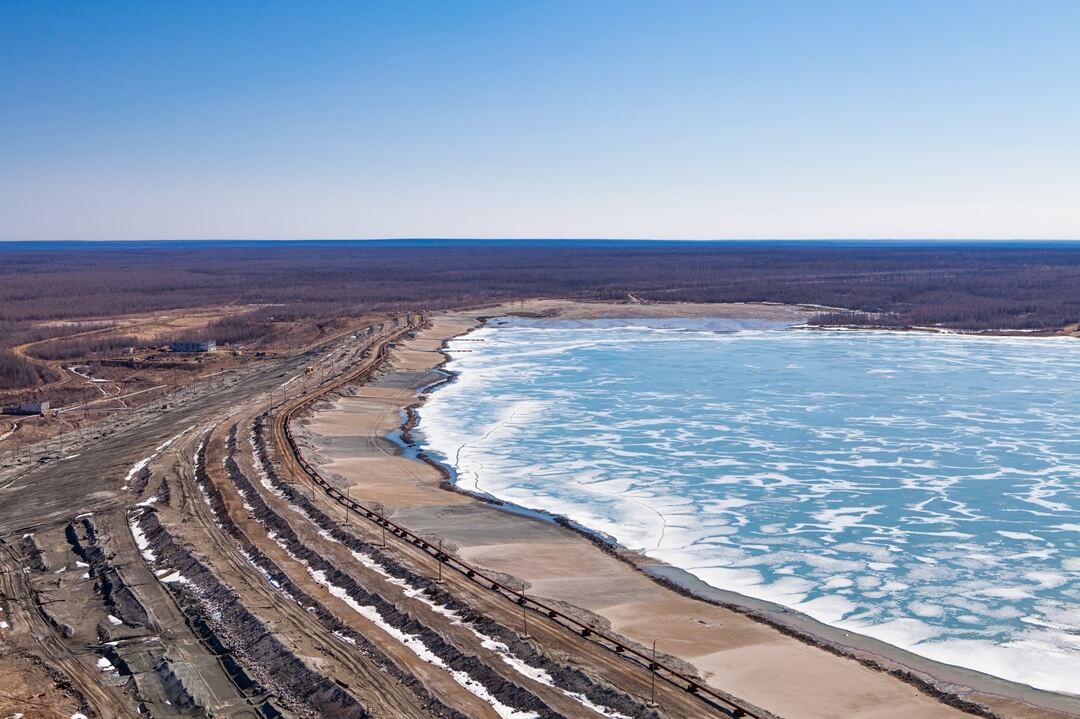
Beyond the GISTM Deadline: Managing Tailings Facilities to Reduce Risk
As mine planning and closure practitioners, we recognize the importance of tailings storage facility (TSF) standards and of developing systems that support our clients in meeting conformance obligations. August 5, 2025, marked an inflection point in the mining industry’s approach to tailings risk and accountability. The date was a deadline for producers to demonstrate conformance with the Global Industry Standard on Tailings Management (GISTM) for any remaining and low-risk TSFs, including those that were exempt from the previous deadline.
Public reporting showed significant progress toward conformance, along with ongoing work as TSFs move through defined implementation pathways (ICMM, 2025). However, conformance alone doesn’t measure the effectiveness of the processes put in place, especially as they relate to performance and risk management.
Companies that have achieved GISTM conformance now have an opportunity to evaluate how well their systems perform and to strengthen them where gaps may persist. In this month’s Conversation on Closure, we explore how TSF operators can move beyond compliance through risk-informed facility designs and monitoring programs that are thoughtfully developed to support long-term performance throughout the facility lifecycle.
Evolving Expectations After the GISTM Milestone
GISTM has helped operators strengthen governance, transparency, and internal accountability, and it addresses rising expectations from communities, regulators, and investors for proven long-term performance.
Furthermore, GISTM and the systems used to meet compliance provide a platform for communication and engagement between operators and impacted groups, including:
- communities and Indigenous rightsholders with questions and concerns about long-term stability, water quality, and post-mining land use;
- regulators focusing on ensuring that role clarity, critical controls, and emergency preparedness are understood and implemented throughout the facility’s full life cycle; and
- investors and insurers seeking evidence that operators identify, manage, and transparently communicate tailings risks.
GISTM provides a globally consistent benchmark for tailings governance, design, and disclosure, which sits alongside other frameworks, including the International Council on Mining and Metals (ICMM) Tailings Management Good Practice Guide, Towards Sustainable Mining (TSM) Tailings Management Protocol from the Mining Association of Canada, jurisdictional regulatory requirements and dam safety guidelines.
Despite these advancements, the mining industry still experiences tailings facility failures and faces challenges in maintaining public confidence and trust. As CIM Magazine noted, questions remain about the degree to which some facilities need to assess risk to meet the standard, and suggests a decisive oversight body to clarify these questions would strengthen the standard (CIM Magazine, 2025).
Public disclosures indicate that a significant proportion of facilities have achieved conformance, with structured plans in place for remaining facilities and the design of future facilities. However, if these systems aren’t effectively implemented, consistently maintained, and fully integrated into operational practice, conformance does not guarantee effective risk management of these facilities.
From Conformance to Long-Term Performance
Conformance statements provide an important snapshot of governance and design against a defined standard. Long-term trust, built in the early stages of project development and maintained through operations, will depend on how operators continue to comply with standards during periods of care and maintenance, long-term variability of climate and hydrologic conditions, and active closure and post-closure transitions.
Since every TSF is unique, it is important to collaborate with various disciplines and the impacted groups to tailor management pathways and timelines based on site conditions, the facility’s risk profile, and closure and regulatory objectives.
Building site-specific systems that bring together mine and tailings planning, design, water stewardship, and performance monitoring into a single integrated framework can help operators better manage and reduce risks, including:
- managing and operating a tailings facility, especially through transition periods such as care and maintenance, active closure, and post-closure;
- strengthening the link between day-to-day decisions and long-term outcomes; and
- supporting clearer, more confident communication with regulators, rightsholders, and local community members.
Responsibly Designing and Monitoring Tailings Facilities
To support long-term facility performance and reduce operations- and closure-related risks, TSFs should be designed, operated, and monitored with a whole-lifecycle approach in mind, including establishing clear closure and post-mining land use objectives (ICMM, 2019). This is most effective if it is done in collaboration with rightsholders and local communities to co-create a closure vision and objectives that are meaningful and transparent.
A critical component of facility design is understanding the credible failure modes and the range of uncertainties related to key design inputs. This understanding helps identify design alternatives that achieve the required safety factors and an acceptable level of risk for the facility. This assessment also informs practical construction methods and sequencing during start-up and operations that are crucial for developing effective risk management strategies throughout the lifecycle.
During the design stage, numerical modelling can be used to evaluate the physical stability of the facility under both static and pseudo-static loading conditions across various stages of the lifecycle. These analyses help optimize facility geometry, assess potential failure mechanisms, and demonstrate compliance with regulatory and industry requirements.
Conducting these analyses also helps operators understand which design inputs have the greatest effect on performance outcomes, enabling the identification of parameters that should be prioritized for field monitoring.
For existing facilities where closure objectives may not have been incorporated early in the lifecycle, comprehensive monitoring programs help operators better understand facility performance and identify emerging trends. When designing monitoring programs, it is important to specify what, where, and when to measure, aligning with key drivers such as slope stability, pore-water pressure response, and water quality.
Aspects of an effective monitoring program for tailings facilities include:
- identifying the target stratigraphy, depth, or zone;
- identifying appropriate monitoring approaches (automated instrumentation, manual sampling, or manual field measurements);
- selecting instrumentation and sampling protocols;
- developing monitoring and instrumentation inspection schedules; and
- considering spatial distribution.
Monitoring should be automated to the greatest extent possible. This starts with instrumentation and field data acquisition systems (e.g., data loggers). Modern communication systems (e.g., radios, cellular or satellite modems) facilitate remote download of field data at routine intervals to data management systems. Now, data can be easily managed through dashboards that display the status of all automated field measurements relative to programmed action or trigger settings (e.g., critical movement thresholds or water level elevations).
Having access to timely data alone isn’t sufficient for risk management. Data validation and quality assurance reviews help identify errors, investigate anomalies, and verify that monitoring data accurately reflects field conditions. Credible and defensible data can then be relied upon to support engineering assessments, operational decision-making, regulatory compliance, and long-term performance evaluation.
Okane’s Approach
It is essential to adapt design practices and management systems to the evolving risks of tailings facilities throughout their lifecycle. At Okane, we integrate thoughtful design, tailored monitoring programs, and strong data management into tailings facility management to create the conditions for long-term effective performance management that extends beyond conformance.
As an example of this work, Okane supported a gold mine in British Columbia, Canada, currently in care and maintenance. The legacy tailings facility at this site has a High consequence classification and presented ongoing dam safety and regulatory compliance challenges. To help maintain the site’s permit requirements and risk management, Okane was engaged as the Engineer of Record to provide annual facility performance inspection reporting and closure design support.
Our team conducted site inspections of the TSF and adjacent pond, including a review of available instrumentation data to assess facility performance against the protocols and best practices outlined by the Mining Association of Canada (MAC) and the Canadian Dam Association (CDA). While the facility was operating in accordance with these guidelines, our assessment identified a potential failure mechanism that could be triggered by a major precipitation event exceeding the inflow design flood.
This finding prompted an evaluation of the facility’s potential failure mechanisms and informed the development of a detailed closure design focused on decommissioning the TSF through the implementation of a low-permeability cover system. The closure landform design was developed to reduce net percolation, lower the phreatic surface, and improve long-term geotechnical stability in accordance with CDA guidelines.
CDA Annual Conference & Trade Show
This October 25-28, 2026, join Rachel Sawyer at the upcoming CDA Annual Conference & Trade Show in Halifax. Rachel, Okane’s Principal for Geotechnical Engineering and Tailings Management, will draw on practical industry experience and share her insights on how mine operators can move beyond compliance and enhance the effectiveness of tailings management systems. Join the discussion to learn how shifting the focus from compliance to effectiveness can support meaningful risk reduction in tailings management!
To explore how we can integrate closure and develop risk reduction strategies tailored to your tailings facility, contact us at info@okaneconsultants.com.
References
CIM Magazine. (2025). The next chapter in tailings management. Canadian Institute of Mining, Metallurgy and Petroleum. https://magazine.cim.org/en/environment/the-next-chapter-in-tailings-management-en/
International Council on Mining and Metals. (2025, November 4). ICMM publishes report on members’ collective progress towards full conformance with GISTM. ICMM. https://www.icmm.com/en-gb/news/2025/progress-towards-full-conformance-GISTM
International Council on Mining and Metals. (2019). Integrated mine closure: Good practice guide (2nd ed.). ICMM. https://www.icmm.com/en-gb/guidance/environmental-stewardship/integrated-mine-closure